How Do I Protect My Pipes Through a Snowbelt Winter?
Keep the house heated to at least 15°C, insulate pipes along outside walls and seal drafts at the rim joist, shut off and drain outdoor taps in the fall, open cabinet doors on cold nights and, if you'll be away, shut off the main and drain the lines.
Request a plumberHow cold does Barrie get?
January's mean temperature is −7.8°C. Nights of −20°C are common and −30°C happens occasionally. Lake-effect snow squalls off Lake Huron and Georgian Bay mean the city averages 286 cm of snow a year.
Which pipes are at risk?
Pipes in outside walls, kitchen sinks on exterior walls, lines in garages, crawl spaces and cottage floors, and anything near the basement rim joist where cold air leaks in around the sill plate.
What should I do in the fall?
Disconnect hoses, close the inside valve for each outdoor tap and open the tap outside to drain it. Wrap exposed pipes in foam sleeves and seal gaps around pipes where they pass through outside walls.
What about the coldest nights?
Open cabinet doors under sinks on outside walls so warm air can reach the pipes. Keep the thermostat steady overnight. In a real deep freeze, a thin trickle from a vulnerable tap keeps water moving.
What if I'm going away?
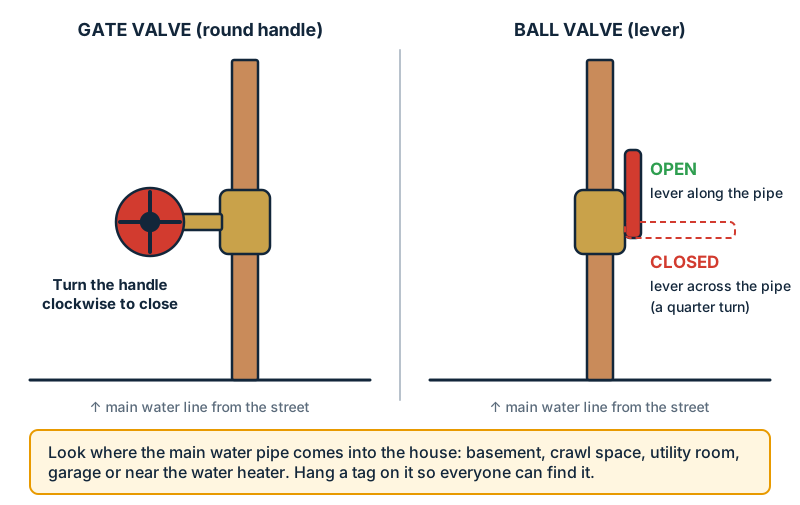
Don't turn the heat off. For long trips or empty cottages, shut off the main, open the taps to drain the lines and have someone check the house in cold snaps.
What if a pipe freezes anyway?
Open the tap, warm the pipe slowly with a hair dryer and watch for leaks as it thaws. Never use a torch. If it has split, close the main and see frozen pipe repair.
More plumbing guides
Need a plumber in Barrie?
Send a request and a plumber will get in touch. Requests answered 7 days a week.
Request a plumberPrefer email? [email protected]